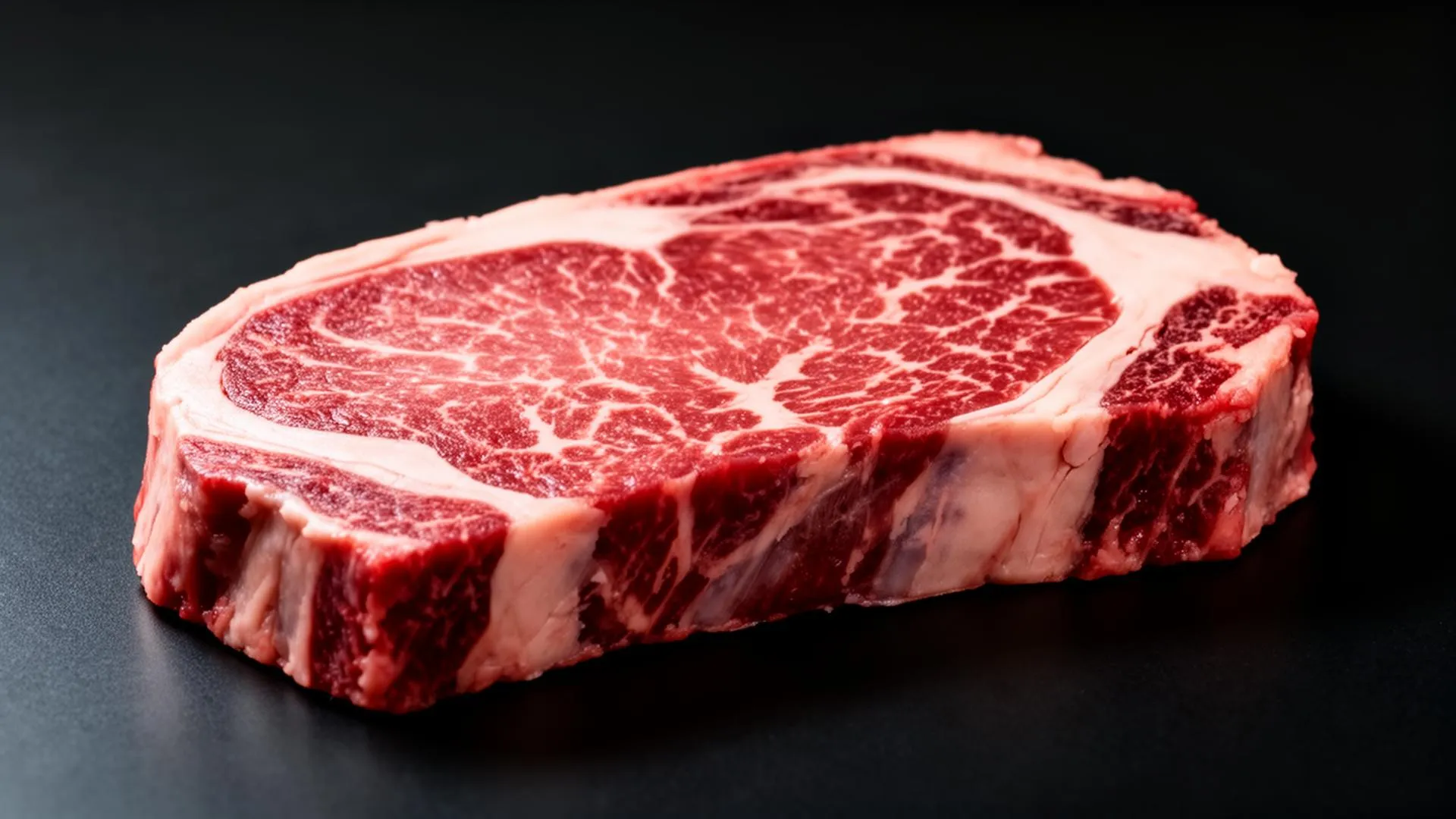
Flank primal (hindquarter abdominal) · Beef cut guide
Flank Steak
Flank steak is a thin, fibrous cut taken from the abdominal muscles (rectus abdominis) of the steer. It is one of the leanest beef cuts but compensates with concentrated, beefy flavor, and demands grain-direction respect when slicing, because its long fibers turn from tender to inedibly chewy depending on the slice angle.


Anatomy and naming
Flank steak comes from the flank primal, which sits behind the plate primal on the underside of the steer. The muscle is constantly working as the animal breathes and moves, producing a tight, long-fibered grain visible to the naked eye as parallel lines running across the steak. The fibers run lengthwise, which is what makes slicing direction so important, slice with the grain and the fibers stay long and chewy; slice across the grain and the fibers shorten into bite-sized pieces.
A typical flank steak is 1.5 to 2 lbs (700 to 900 g), about 1 to 1.5 cm thick, and oblong in shape. Its low fat content means it cooks fast and dries out quickly past medium. Flank is the canonical steak for fajitas (US), grilled steak salad, stir-fry, and ropa vieja (Cuba). Argentina prizes the closely related "vacío" cut for asado (grilled over wood); Brazil grills the neighboring "fraldinha" similarly.
Also known as
Flank · Bavette (France, related) · Vacío (Argentina) · Fraldinha (Brazil, neighboring cut)
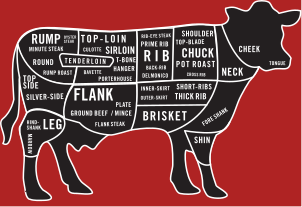
USDA beef carcass diagram - Flank Steak sits in the Flank primal (hindquarter abdominal)
How to spot a good one
Visual markers
Long, thin oval shape, typically 30-40 cm long, 15-20 cm wide, 1-1.5 cm thick
Visible parallel grain lines running lengthwise, this is the defining anatomical feature
Deep red lean color, slightly darker than ribeye or strip
Minimal marbling, flank rarely shows the white flecks visible on premium cuts
Light external fat trim, usually under 0.5 cm
Cooking, on Pro
Cook flank steak like its grade
MeatGrader Pro gives you a cooking guide tailored to the exact cut and quality grade in front of you. Temperature, time, primary and alternative methods, resting, pairings.
A USDA Prime flank steak gets a different guide than a Choice flank steak, and an A5 BMS 9 wagyu cut gets something else again. Generic recipes do not know which one you have. Pro does.
Free with 3 analyses on signup. Pro is $1.99/month for unlimited analyses + the cooking guide.
How it grades
Grading flank steak
Flank is graded at the carcass level under USDA / CBGA / KAPE / MSA / JMGA, but the cut's anatomy means marbling rarely passes the threshold for top-tier grades. A USDA Prime carcass produces a flank steak that grades Choice at best. For flank, the freshness, color, and grain visibility matter more than the carcass grade. MeatGrader scores flank on color, grain quality, and freshness markers rather than fine marbling, since marbling is an unreliable signal on this cut.
FAQ
Common questions about flank steak
What people ask most about picking, cooking, and grading this cut.
Score any flank steak from a photo
Photograph your flank steak and see how it grades against the regional system you select.