United States · United States Department of Agriculture
USDA Beef Grading
USDA beef grading is the United States Department of Agriculture standard for assessing beef quality. It evaluates intramuscular fat (marbling) and physiological maturity to assign one of four primary quality grades. Prime, Choice, Select, or Standard, measured at the ribeye between the 12th and 13th ribs.


What USDA Beef Grading actually measures
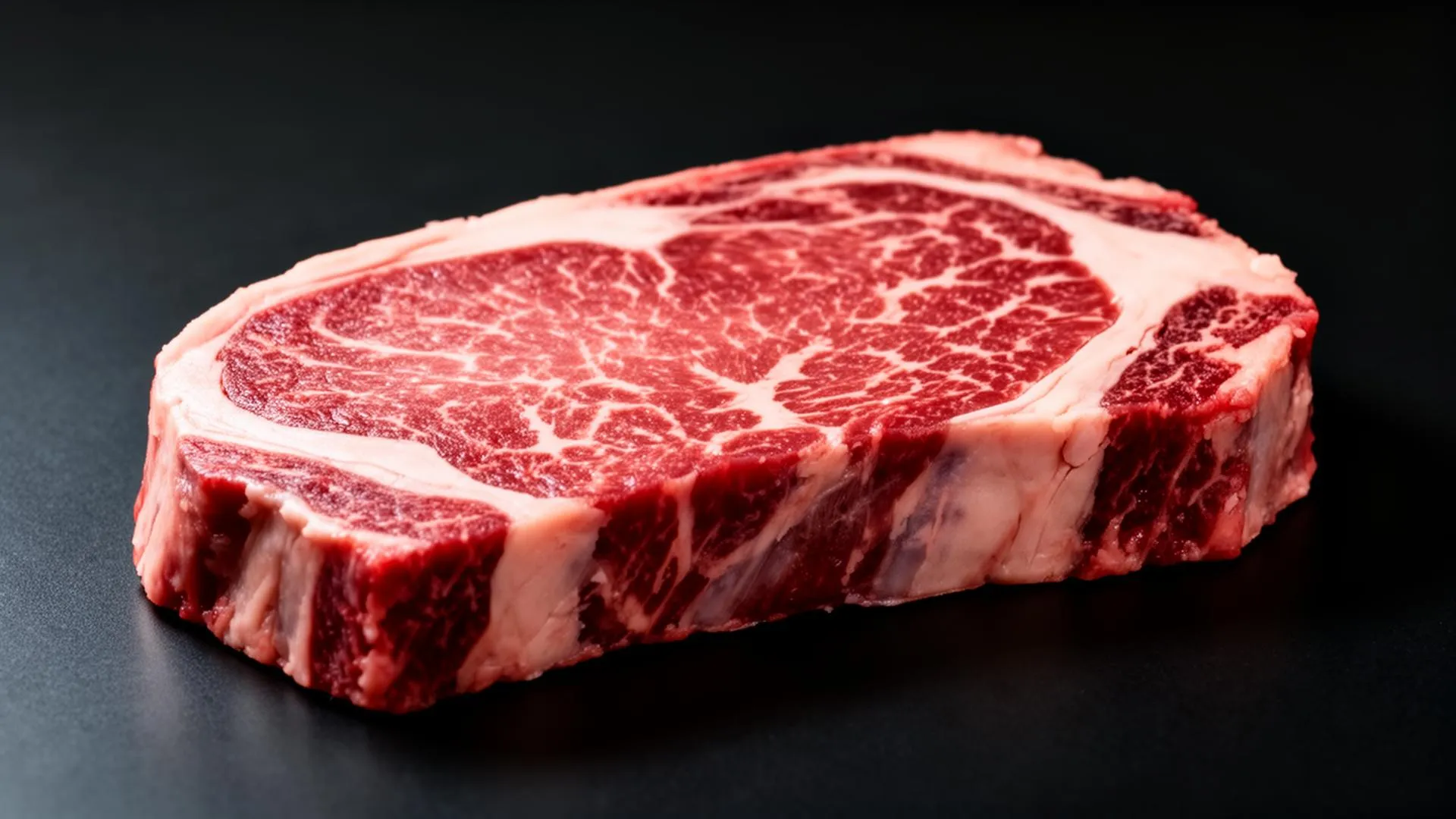
USDA grading is voluntary and performed by trained graders at certified facilities. Approximately 11% of US beef qualifies as Prime, 72% as Choice, 13% as Select, and the remainder as Standard or ungraded. Marbling is the primary visible factor: the more white intramuscular fat dispersed through the lean, the higher the grade.
The four primary grades sit on a marbling hierarchy that runs (best to worst): Abundant, Moderately Abundant, Slightly Abundant, Moderate, Modest, Small, Slight, Traces, Practically Devoid. Choice splits into three sub-levels (Moderate, Modest, Small) so retailers can price within the grade.
Read the universal four-factor framework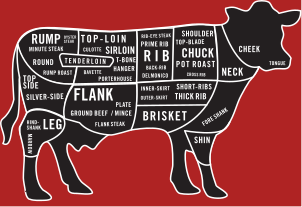
United States carcass diagram, primal cuts and grading reference points
The Scale
Grades from highest to lowest
Prime
~8 to 13% IMF
Slightly Abundant to Abundant marbling. Young, well-fed cattle. The grade most often served at upscale steakhouses and butcher cases.
Choice
~4 to 8% IMF
Small to Moderate marbling. High quality, three sub-levels (Moderate, Modest, Small). The most-produced grade in the United States.
Select
~2 to 4% IMF
Slight marbling. Uniform quality, leaner. Fairly tender but may lack juiciness and full flavor.
Standard
under 2% IMF
Traces to Practically Devoid marbling. Often sold ungraded or under store brand at supermarket value pricing.
What Graders Evaluate
Visual factors at the carcass
Marbling, the amount and distribution of intramuscular fat within the ribeye, judged against USDA reference photographs
Maturity, physiological age estimated from skeletal and lean characteristics, with younger carcasses (A maturity, ~9 to 30 months) eligible for the highest grades
Lean color, bright cherry-red is preferred; darker color suggests older animals or improper handling
Texture, fine-grained lean is associated with younger, higher-quality carcasses
External fat, color (white preferred over yellow) and firmness contribute to overall quality assessment
From a Photo
How MeatGrader applies USDA Beef Grading
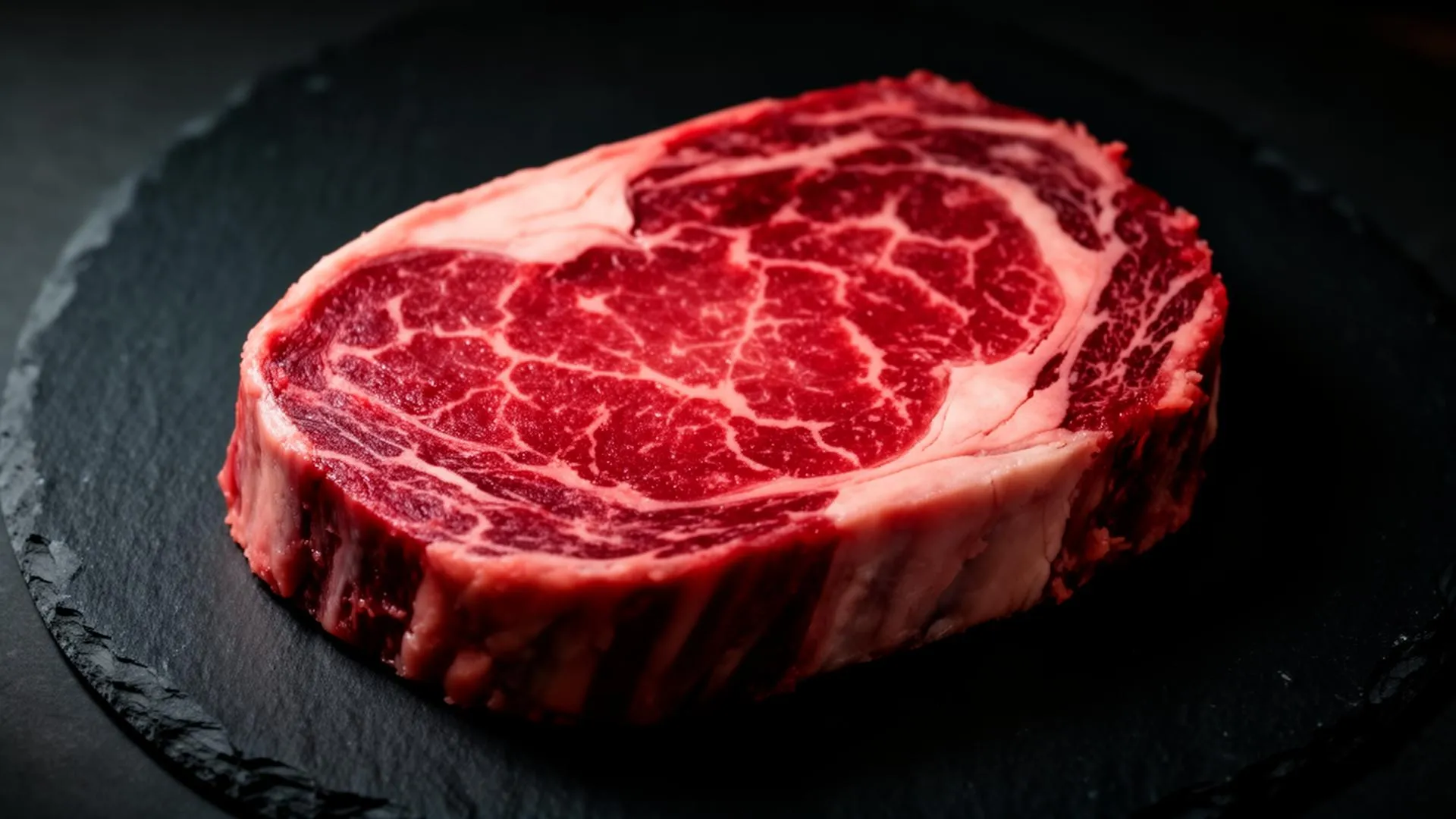
MeatGrader applies the same four visual factors USDA graders use, marbling, lean color, texture, and fat cap, to a retail-cut photograph rather than a chilled carcass. The model is trained on the USDA reference imagery and returns the inferred grade plus a per-factor breakdown so you can see why a given cut scored where it did. Treat the result as informed insight, not certification: official USDA grading is performed only at certified facilities by trained graders.
FAQ
Common questions about USDA Beef Grading
What people ask most about how United States grades beef.
Compare
Other grading systems
Each region applies the same four visual factors (marbling, lean color, fat, texture) to its own scale.
Grade any cut against USDA Beef Grading
Photograph any beef cut and see how it scores under USDA Beef Grading and the other five systems.