Plate primal (forequarter) · Beef cut guide
Brisket
Brisket is a large cut from the front of the steer that comprises the pectoral muscles, heavily worked, rich in connective tissue, and divided into two parts: the leaner "flat" and the fattier "point". Because the muscle is constantly load-bearing, brisket needs long, slow cooking to break down its collagen, which is also why it is the centerpiece of American barbecue culture.


Anatomy and naming
A whole-packer brisket weighs 12 to 18 lbs (5.5 to 8 kg) and contains both the flat (pectoralis profundus) and the point (pectoralis superficialis), separated by a thick fat layer called the deckle. The flat is leaner, more uniform, and slices into rectangular portions; the point is fattier, more marbled, and traditionally cubed into "burnt ends". Most retail-cut brisket is the flat; competition-level BBQ uses whole-packer briskets.
Because brisket comes from a heavily-worked muscle, its eating quality depends almost entirely on cooking method, not raw quality. Even high-grade brisket eats poorly if undercooked; even modest-grade brisket can eat well with 12+ hours of low-and-slow cooking. The grade signal that matters most for brisket is marbling on the point and fat cap on the flat, both of which protect the cut from drying during long cooks.
Also known as
Beef brisket · Pecho (Spain/LatAm) · Peito bovino (Brazil) · Hard cut
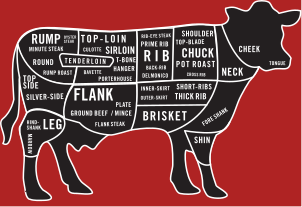
USDA beef carcass diagram - Brisket sits in the Plate primal (forequarter)
How to spot a good one
Visual markers
A thick fat cap on the lean side, ideally 0.5 to 1 cm thick, too thick is wasted, too thin is dry
Visible marbling within the point (the fattier half), this fat renders down during cooking and produces "burnt ends"
Flexibility, a fresh, well-handled brisket should bend and almost fold over its own deckle when held by one end. A stiff, board-like brisket suggests cold/old/over-trimmed product
Even thickness across the flat, uneven flats (thin at one end, thick at the other) cook unevenly
Light marbling within the flat, full Prime-level marbling is rare on the flat; small marbling is the realistic target
Cooking, on Pro
Cook brisket like its grade
MeatGrader Pro gives you a cooking guide tailored to the exact cut and quality grade in front of you. Temperature, time, primary and alternative methods, resting, pairings.
A USDA Prime brisket gets a different guide than a Choice brisket, and an A5 BMS 9 wagyu cut gets something else again. Generic recipes do not know which one you have. Pro does.
Free with 3 analyses on signup. Pro is $1.99/month for unlimited analyses + the cooking guide.
How it grades
Grading brisket
USDA grades brisket at the carcass level (Prime / Choice / Select). USDA Prime brisket is the gold standard for competition BBQ because the extra marbling protects against drying. USDA Choice with a thick fat cap is the realistic home-cook target. MeatGrader scores brisket on marbling at the point, fat cap thickness, and color, weighting these for cook-tolerance rather than steak-style eating.
FAQ
Common questions about brisket
What people ask most about picking, cooking, and grading this cut.
Related cuts
Other cuts to know
Score any brisket from a photo
Photograph your brisket and see how it grades against the regional system you select.