Japan · Japan Meat Grading Association
JMGA Japanese Beef Grading and BMS
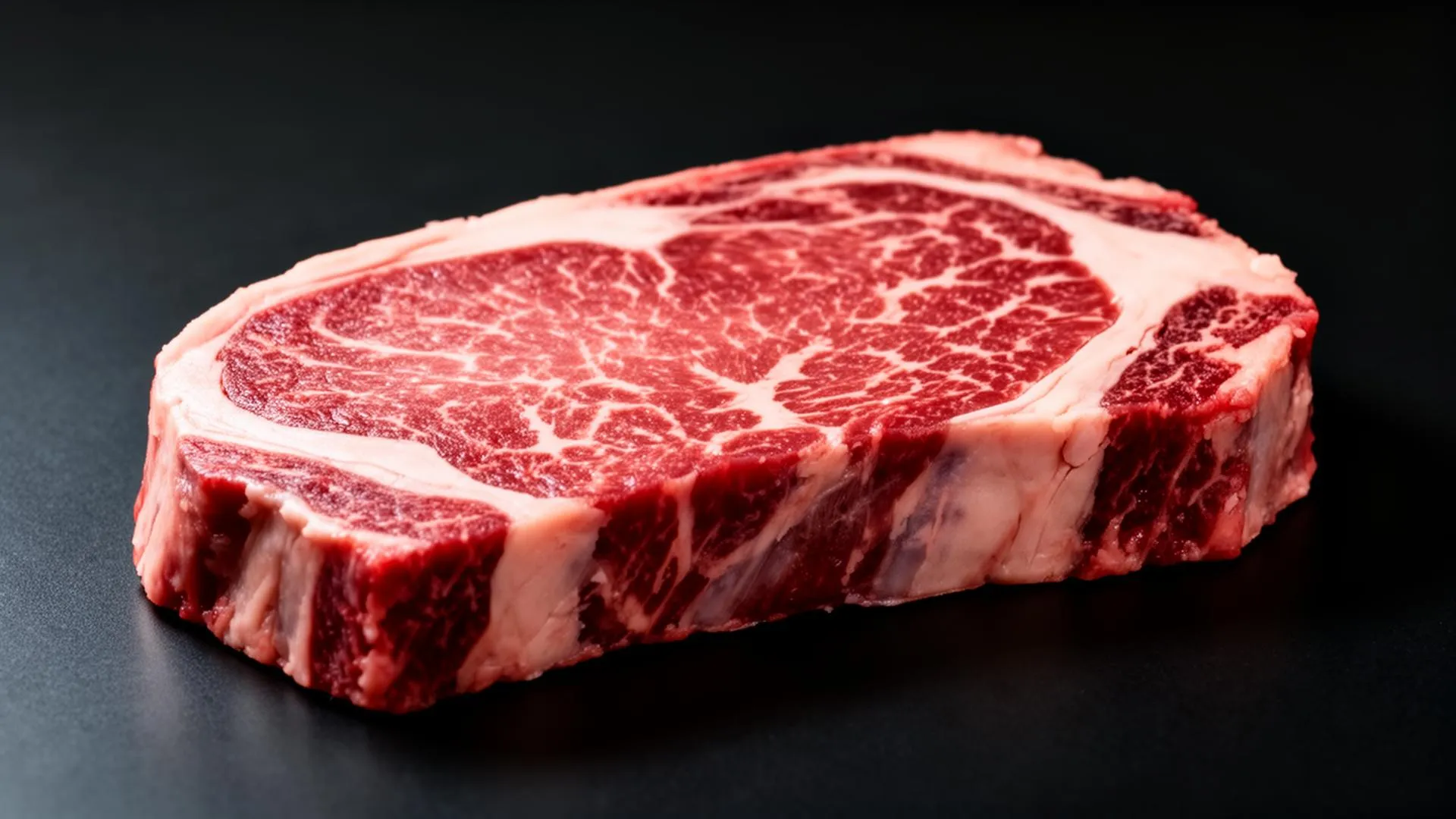
JMGA grading is the Japan Meat Grading Association standard for Wagyu and other Japanese-origin beef. It combines a Yield Grade (A, B, or C) with a Quality Grade (1 to 5) and a Beef Marbling Standard (BMS) score from 1 to 12, where the highest grade. A5 with BMS 8 to 12, represents the densest, most evenly-distributed marbling in the world commercial market.


What JMGA Japanese Beef Grading and BMS actually measures
The JMGA is the official body that grades Wagyu and Japanese-origin beef. The full grade is written as a yield letter (A, B, C) followed by a quality number (1 to 5), so A5 is the highest combination. The Quality Grade is set by the lowest of four sub-scores: BMS (marbling), BCS (Beef Color Standard 1 to 7), BFS (Beef Fat Standard 1 to 7), and firmness/texture.
BMS is the most discussed component because it describes marbling density on a 1 to 12 scale that maps directly onto visible intramuscular fat distribution. BMS 1 and 2 are below the Wagyu floor; BMS 3 to 4 is the minimum to qualify; BMS 8 to 12 is reserved for the densest, highest-tier Wagyu, only about 0.5% of Japanese carcasses reach BMS 12.
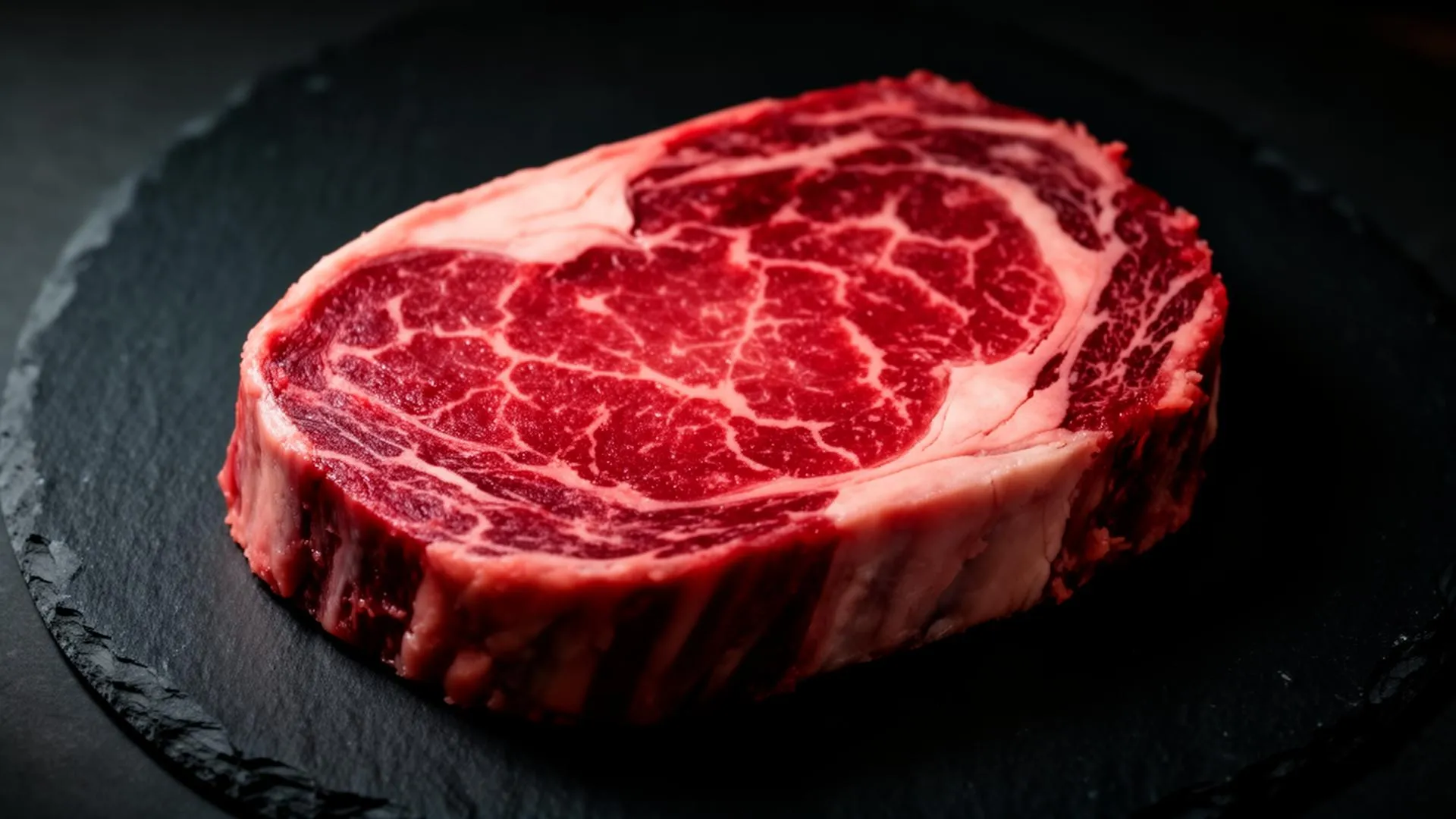
High-BMS Wagyu shows a fine, web-like marbling pattern rather than clumpy fat deposits. The lean almost appears pink-white because of how much intramuscular fat is dispersed through it.
Read the universal four-factor framework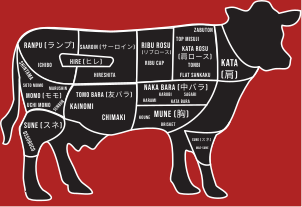
Japan carcass diagram, primal cuts and grading reference points
The Scale
Grades from highest to lowest
BMS 11 to 12
~60 to 72% IMF
Supreme. Almost white with marbling. Approximately 0.5% of carcasses reach BMS 12.
BMS 9 to 10
~50 to 60% IMF
Very-high-grade Wagyu. Exceptional marbling density.
BMS 7 to 8
~40 to 50% IMF
Above-average Wagyu. Rich, dense marbling.
BMS 5 to 6
~30 to 40% IMF
Lower-grade Wagyu. Good balance of marbling and lean.
BMS 3 to 4
~21 to 30% IMF
Minimum threshold for Wagyu qualification. Comparable to USDA Prime.
BMS 1 to 2
under ~21% IMF
Below Wagyu marbling floor. Almost no intramuscular fat.
What Graders Evaluate
Visual factors at the carcass
BMS (Beef Marbling Standard), marbling density on a 1 to 12 scale
BCS (Beef Color Standard), lean color on a 1 to 7 scale
BFS (Beef Fat Standard), fat color, gloss, and texture on a 1 to 7 scale
Firmness and texture, assessed visually and by touch
Yield Grade (A, B, C), calculated from carcass measurements; A is the highest yield
From a Photo
How MeatGrader applies JMGA Japanese Beef Grading and BMS
MeatGrader applies the JMGA quality factors. BMS, lean color, fat color, and texture, to a retail-cut photograph. The model returns the inferred BMS score and the resulting Quality Grade (1 to 5), tuned to JMGA reference imagery rather than USDA. Yield Grade (A, B, C) is not estimated from a retail-cut photo because it requires whole-carcass measurements.
FAQ
Common questions about JMGA Japanese Beef Grading and BMS
What people ask most about how Japan grades beef.
Compare
Other grading systems
Each region applies the same four visual factors (marbling, lean color, fat, texture) to its own scale.
Grade any cut against JMGA Japanese Beef Grading and BMS
Photograph any beef cut and see how it scores under JMGA Japanese Beef Grading and BMS and the other five systems.