South Korea · Korea Institute for Animal Products Quality Evaluation
KAPE Korean Beef Grading
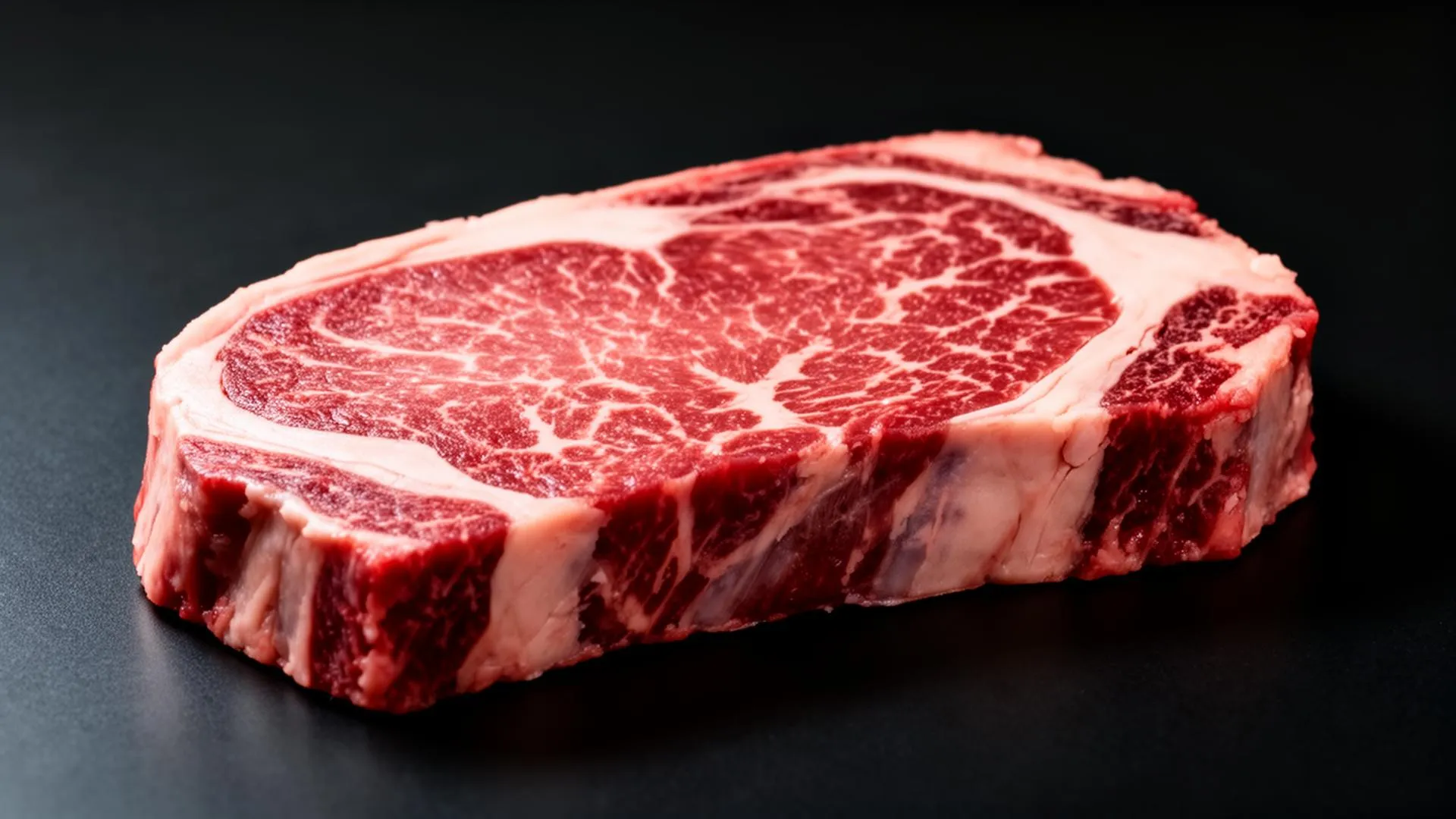
KAPE grading is the South Korean beef quality standard administered by the Korea Institute for Animal Products Quality Evaluation. Beef is assigned a Quality Grade (1++, 1+, 1, 2, or 3, with 1++ the highest) based primarily on marbling density at the ribeye, plus a Yield Grade (A, B, or C) describing carcass yield. The Quality Grade is the dominant signal for retail and is what consumers look for on Hanwoo packaging.


What KAPE Korean Beef Grading actually measures
KAPE was established to evaluate Hanwoo (Korean native cattle) and other beef sold in Korea against a unified national standard. Hanwoo at 1++ rivals the upper end of USDA Prime in marbling density, and Korean retail labels surface the grade prominently, most premium Korean steakhouses serve only 1++ or 1+ Hanwoo.
The Quality Grade 1++ is sometimes split internally into "no. 9" and "no. 8 or 7" sub-tiers based on marbling reference photographs, similar to how USDA Choice splits into Moderate / Modest / Small. Yield Grade A signals the highest proportion of saleable lean from the carcass.
Read the universal four-factor framework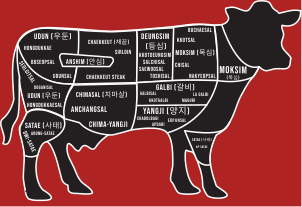
South Korea carcass diagram, primal cuts and grading reference points
The Scale
Grades from highest to lowest
1++
~17%+ IMF
Highest quality grade. Dense, evenly-distributed marbling. Most premium Hanwoo sold in Korea.
1+
~13 to 17% IMF
Excellent marbling. Comparable to USDA Prime. Common in premium retail.
1
~7 to 13% IMF
Good marbling. Comparable to USDA Choice upper.
2
~4 to 7% IMF
Moderate marbling. Standard retail.
3
under 4% IMF
Limited marbling. Often used in stews and marinated dishes.
What Graders Evaluate
Visual factors at the carcass
Marbling, primary driver, judged against KAPE reference imagery
Lean color, bright red preferred
Lean texture, fine-grained preferred
Fat color and texture, white, firm fat preferred
Maturity, assessed from skeletal indicators
From a Photo
How MeatGrader applies KAPE Korean Beef Grading
MeatGrader applies the same five visual factors KAPE graders use, calibrated to Korean reference imagery rather than USDA. The model returns the inferred Korean Quality Grade (1++, 1+, 1, 2, 3) and a per-factor breakdown. Yield Grade (A, B, C) is not estimated from a retail-cut photo because it requires whole-carcass measurements.
FAQ
Common questions about KAPE Korean Beef Grading
What people ask most about how South Korea grades beef.
Compare
Other grading systems
Each region applies the same four visual factors (marbling, lean color, fat, texture) to its own scale.
Grade any cut against KAPE Korean Beef Grading
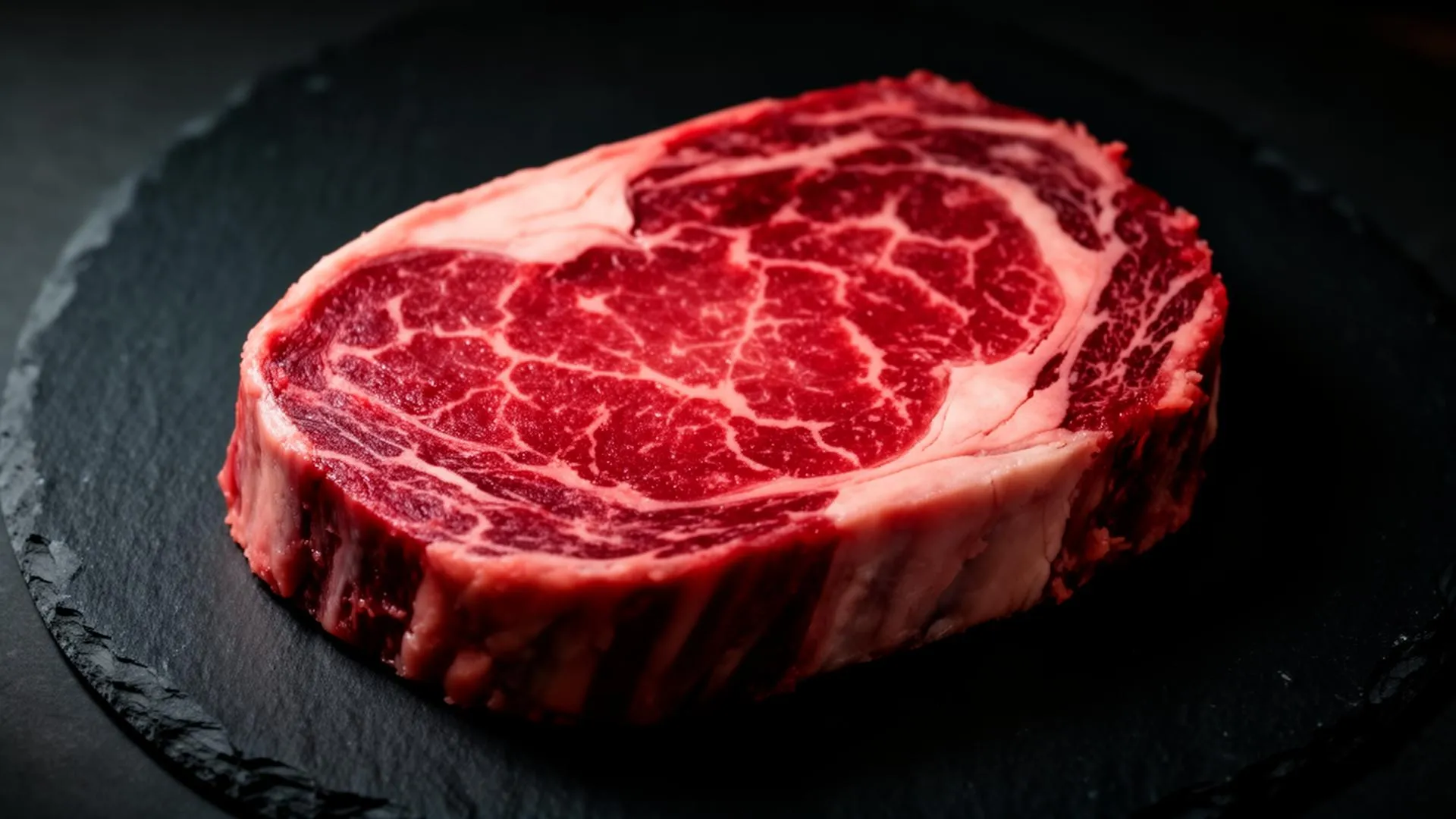
Photograph any beef cut and see how it scores under KAPE Korean Beef Grading and the other five systems.