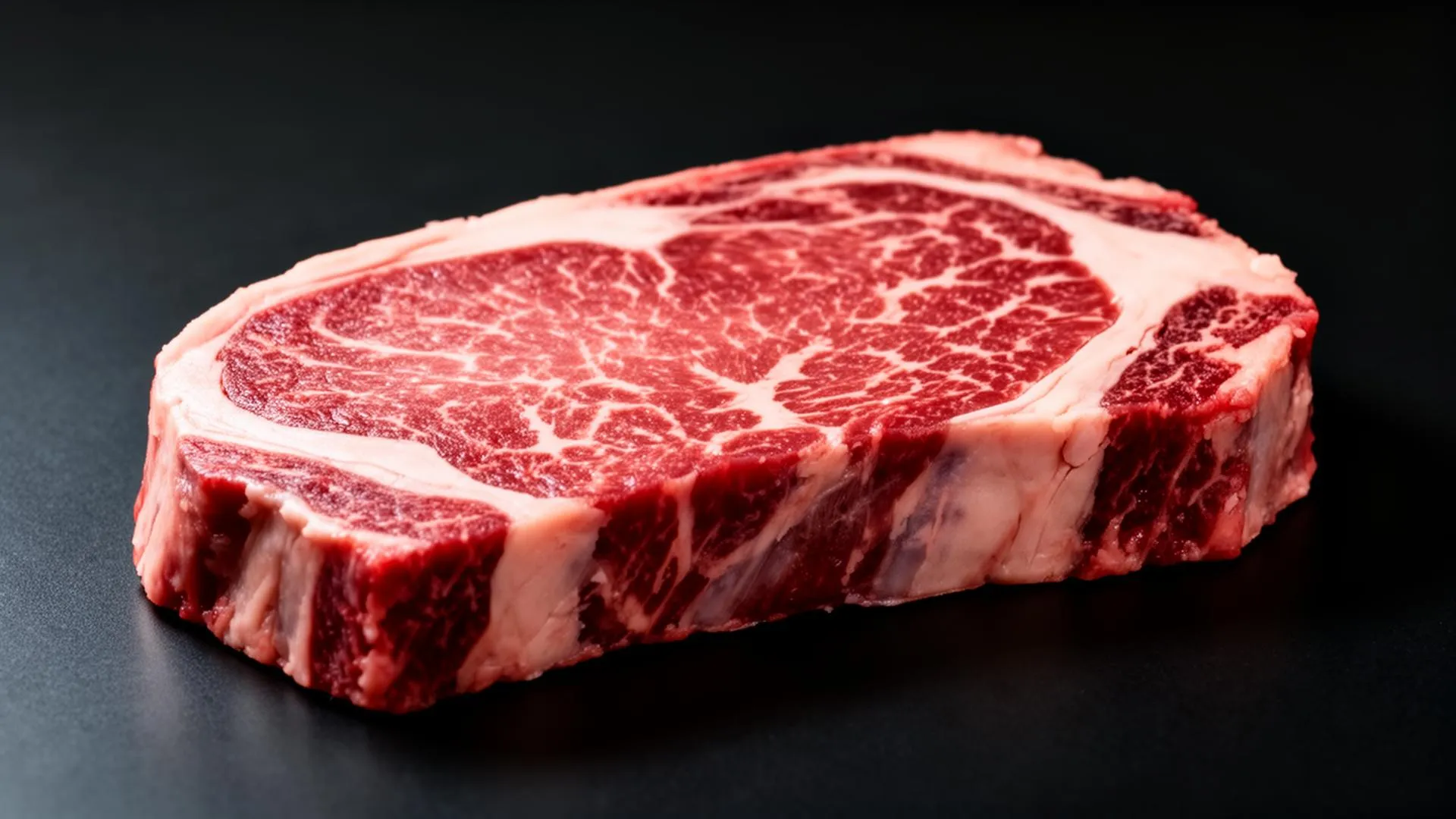
Short loin primal · Beef cut guide
Porterhouse
Porterhouse is a bone-in beef steak cut from the rear of the short loin primal. The T-shaped vertebral bone separates a strip steak section on one side from a tenderloin section on the other. To qualify as porterhouse under USDA standards the tenderloin section must be at least 1.25 inches (32 mm) wide at its widest point; below that threshold the same cut is sold as T-bone.


Anatomy and naming
What this cut actually is
Porterhouse is taken from the rearmost portion of the short loin, where the tenderloin tapers to its largest diameter. That makes the tenderloin half of a porterhouse meaningfully bigger than the tenderloin half of a T-bone, the only real difference between the two cuts. Most porterhouses are 1.5 to 2 inches thick to balance the two muscles cooking at similar rates.
In Italy the same anatomical cut is called bistecca alla Fiorentina when grilled over hardwood; it is traditionally cut very thick (4 to 6 cm) and served rare, sliced. The two-muscle nature is the appeal: one bite of strip-loin chew and beef flavor, one bite of tenderloin softness, side by side.
Also known as
Porterhouse steak · King steak · Bistecca alla Fiorentina (Italy, large)
Porterhouse sits in the short loin primal, highlighted in red
How to spot a good one
Visual markers
A clearly visible tenderloin section at least 1.25 inches (32 mm) wide on the smaller side of the bone
Even thickness across both muscles to avoid uneven cooking
Good marbling on the strip side; the tenderloin side is naturally lean and shows little marbling
Bright cherry-red lean on both muscles, no graying near the bone
Clean cut bone with no shattering, indicating careful butchery
Cooking, on Pro
Cook porterhouse like its grade
MeatGrader Pro gives you a cooking guide tailored to the exact cut and quality grade in front of you. Temperature, time, primary and alternative methods, resting, pairings.
A USDA Prime porterhouse gets a different guide than a Choice porterhouse, and an A5 BMS 9 wagyu cut gets something else again. Generic recipes do not know which one you have. Pro does.
Free with 3 analyses on signup. Pro is $1.99/month for unlimited analyses + the cooking guide.
How it grades
Grading porterhouse
Porterhouse carries the carcass grade assigned at the ribeye cross-section, the same grade that would apply to a strip steak from the same animal. Because the two muscles in a porterhouse have very different intrinsic marbling tendencies, the visual grade signal is read primarily off the strip-side surface. MeatGrader applies the same grading model used for strip steak.
FAQ
Common questions about porterhouse
What people ask most about picking, cooking, and grading this cut.
Score any porterhouse from a photo
Photograph your porterhouse and see how it grades against the regional system you select.