Short loin primal · Beef cut guide
T-Bone Steak
T-bone steak is a single cross-section of the short loin primal containing two muscles separated by a T-shaped vertebra: the strip (longissimus dorsi) on one side and the tenderloin (psoas major) on the other. When the tenderloin portion is at least 1.25 inches / 3.2 cm wide it is officially called a porterhouse; below that, T-bone.


Anatomy and naming
What this cut actually is
The T-bone is the steak version of having both your favorites at once, a portion of strip steak and a portion of tenderloin, separated only by the bone. Cutting from the short loin primal, the tenderloin portion grows larger toward the rear of the loin, which is why porterhouse (the larger-tenderloin cut) comes from the back end and T-bone proper comes from the front.
The cooking challenge is real: strip and tenderloin have different ideal doneness levels. Tenderloin is best at medium-rare (54-58°C / 130-136°F) and does not benefit from extra heat; strip can take a touch more (medium-rare to medium, 54-60°C / 130-140°F) and benefits from a hard sear. Cooking them together means accepting that one half will be slightly off its ideal, most cooks favor the tenderloin and undershoot the strip slightly.
Also known as
Porterhouse (when tenderloin section is large) · Bistecca alla Fiorentina (Italy, when very thick)
T-Bone Steak sits in the short loin primal, highlighted in red
How to spot a good one
Visual markers
A clear T-shaped bone running through the center, separating strip from tenderloin
Tenderloin portion at least 1.25 inches / 3.2 cm wide for a true porterhouse classification
Strip portion showing the same marbling and color markers as a standalone strip steak
Tenderloin portion smooth, fine-grained, slightly darker red than the strip
No gaps or pulled meat between bone and either muscle, clean butchery
Cooking, on Pro
Cook t-bone steak like its grade
MeatGrader Pro gives you a cooking guide tailored to the exact cut and quality grade in front of you. Temperature, time, primary and alternative methods, resting, pairings.
A USDA Prime t-bone steak gets a different guide than a Choice t-bone steak, and an A5 BMS 9 wagyu cut gets something else again. Generic recipes do not know which one you have. Pro does.
Free with 3 analyses on signup. Pro is $1.99/month for unlimited analyses + the cooking guide.
How it grades
Grading t-bone steak
T-bone and porterhouse are graded at the carcass level under all major systems. The marbling visible on a T-bone's strip side is the primary grade signal; the tenderloin side typically marbles less but tracks the carcass grade. MeatGrader analyzes both muscles separately and reports the higher of the two as the canonical grade, since the strip side is the more reliable marbling indicator.
FAQ
Common questions about t-bone steak
What people ask most about picking, cooking, and grading this cut.
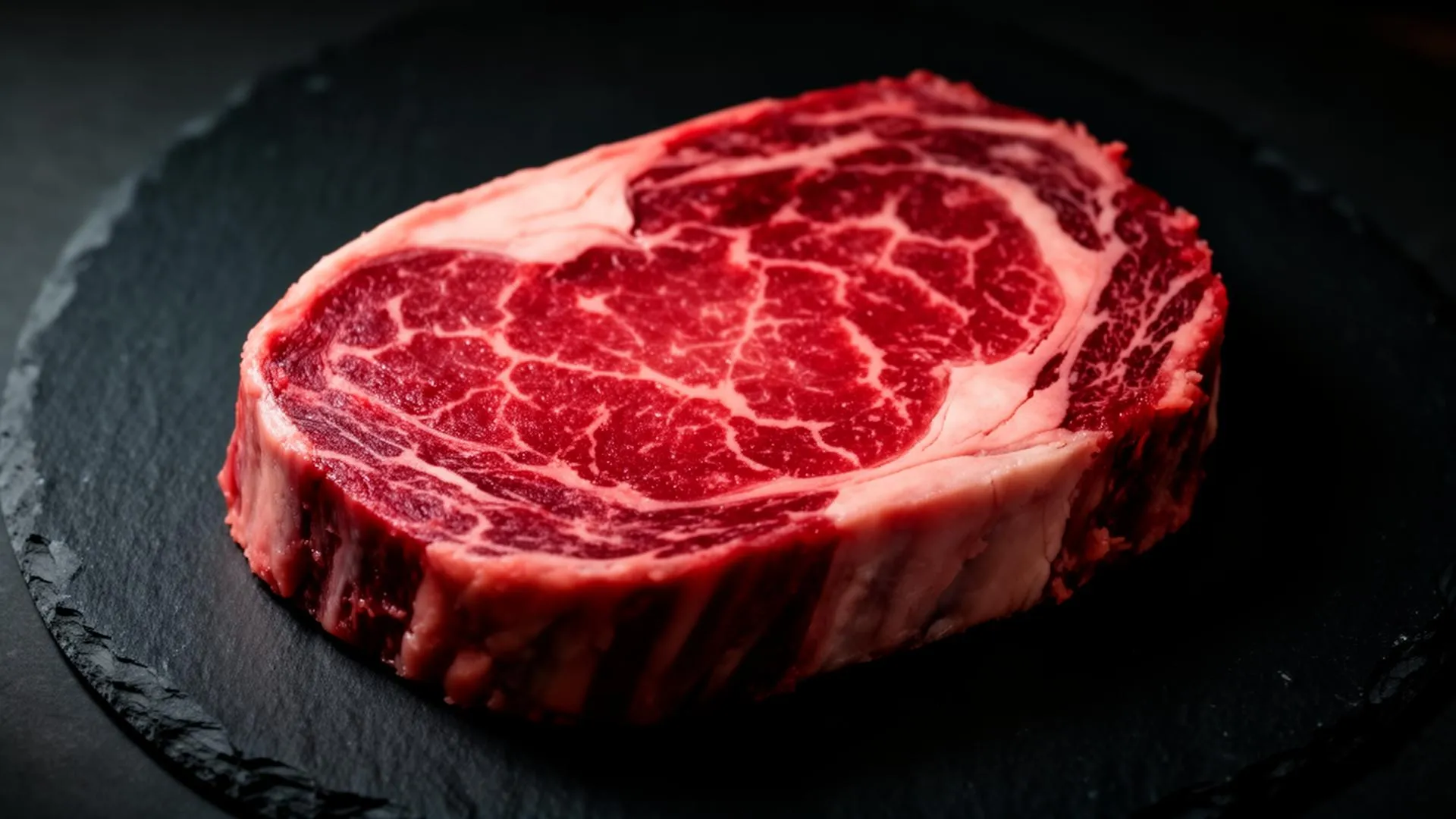
Score any t-bone steak from a photo
Photograph your t-bone steak and see how it grades against the regional system you select.