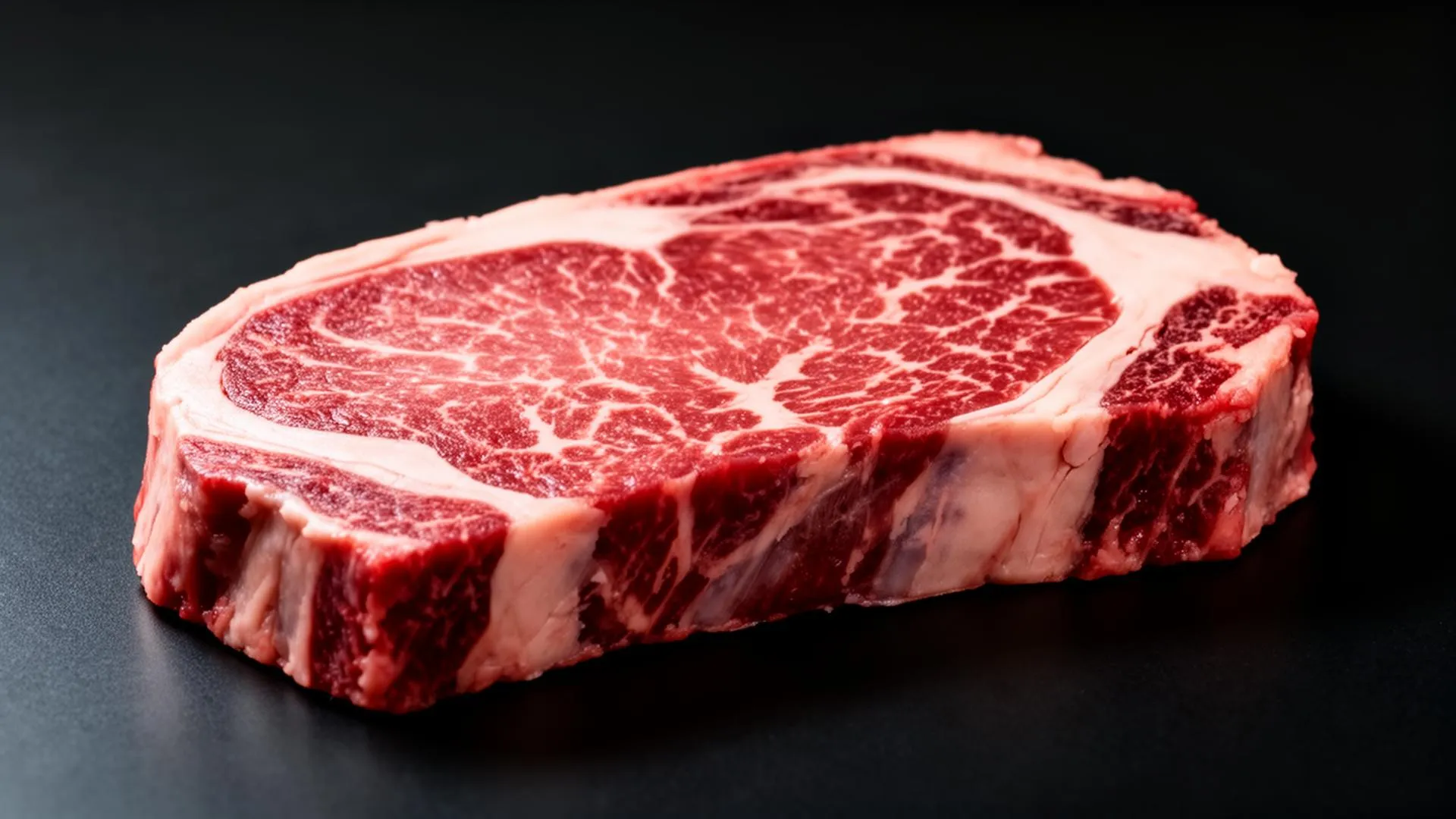
Short loin primal · Beef cut guide
Strip Steak
Strip steak, also called New York strip, Kansas City strip, or top loin, is cut from the longissimus dorsi muscle in the short loin primal, just behind the rib primal where the ribeye comes from. It is the steakhouse standard: well-marbled but not as fatty as the ribeye, firm-textured, and consistent in shape and grade.


Anatomy and naming
Strip steak shares the same long muscle as the ribeye, the longissimus dorsi runs from the rib through the short loin, but the strip portion sits behind the rib primal and is slightly less marbled because the muscle does marginally more work toward the rear. The trade-off is a firmer texture and a more "beefy" flavor profile that some prefer over the ribeye's richer, fattier eating experience.
Most strip steaks are 12 to 16 oz (340 to 450 g) portions, 1 to 1.5 inches (2.5 to 4 cm) thick. The bone-in version (with a section of the spinal column) is sometimes called a "Kansas City strip" or "club steak"; the boneless version is the standard "New York strip". A T-bone or porterhouse is a strip with a section of tenderloin still attached on the other side of the bone.
Also known as
New York strip · Kansas City strip · Top loin · Striploin · Sirloin (UK confusion) · Contre-filet (France)
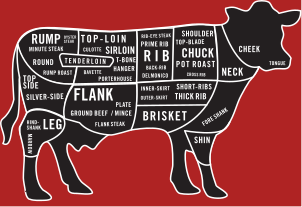
USDA beef carcass diagram - Strip Steak sits in the Short loin primal
How to spot a good one
Visual markers
A consistent oval shape with a small fat strip along one edge, not a heavy fat cap like ribeye
Firm, uniform marbling distribution, strip is less marbled than ribeye but should still show visible white flecks
Bright cherry-red lean color
Fine grain, strip texture is firmer than ribeye but still finer than sirloin
A clean, white outer fat strip (yellow indicates older or grass-only animals, fine but different flavor)
Cooking, on Pro
Cook strip steak like its grade
MeatGrader Pro gives you a cooking guide tailored to the exact cut and quality grade in front of you. Temperature, time, primary and alternative methods, resting, pairings.
A USDA Prime strip steak gets a different guide than a Choice strip steak, and an A5 BMS 9 wagyu cut gets something else again. Generic recipes do not know which one you have. Pro does.
Free with 3 analyses on signup. Pro is $1.99/month for unlimited analyses + the cooking guide.
How it grades
Grading strip steak
Strip is graded at the carcass level under USDA, CBGA, JMGA, MSA/AUS-MEAT, and KAPE. Marbling on a strip is typically one tier below the same carcass's ribeye, a USDA Prime carcass produces a Prime ribeye and an upper-Choice strip. For Wagyu, strip steaks marble heavily but somewhat less densely than ribeye, making BMS 7-10 strips a sweet spot of richness without the over-the-top fattiness of A5 BMS 12 ribeye.
FAQ
Common questions about strip steak
What people ask most about picking, cooking, and grading this cut.
Related cuts
Other cuts to know
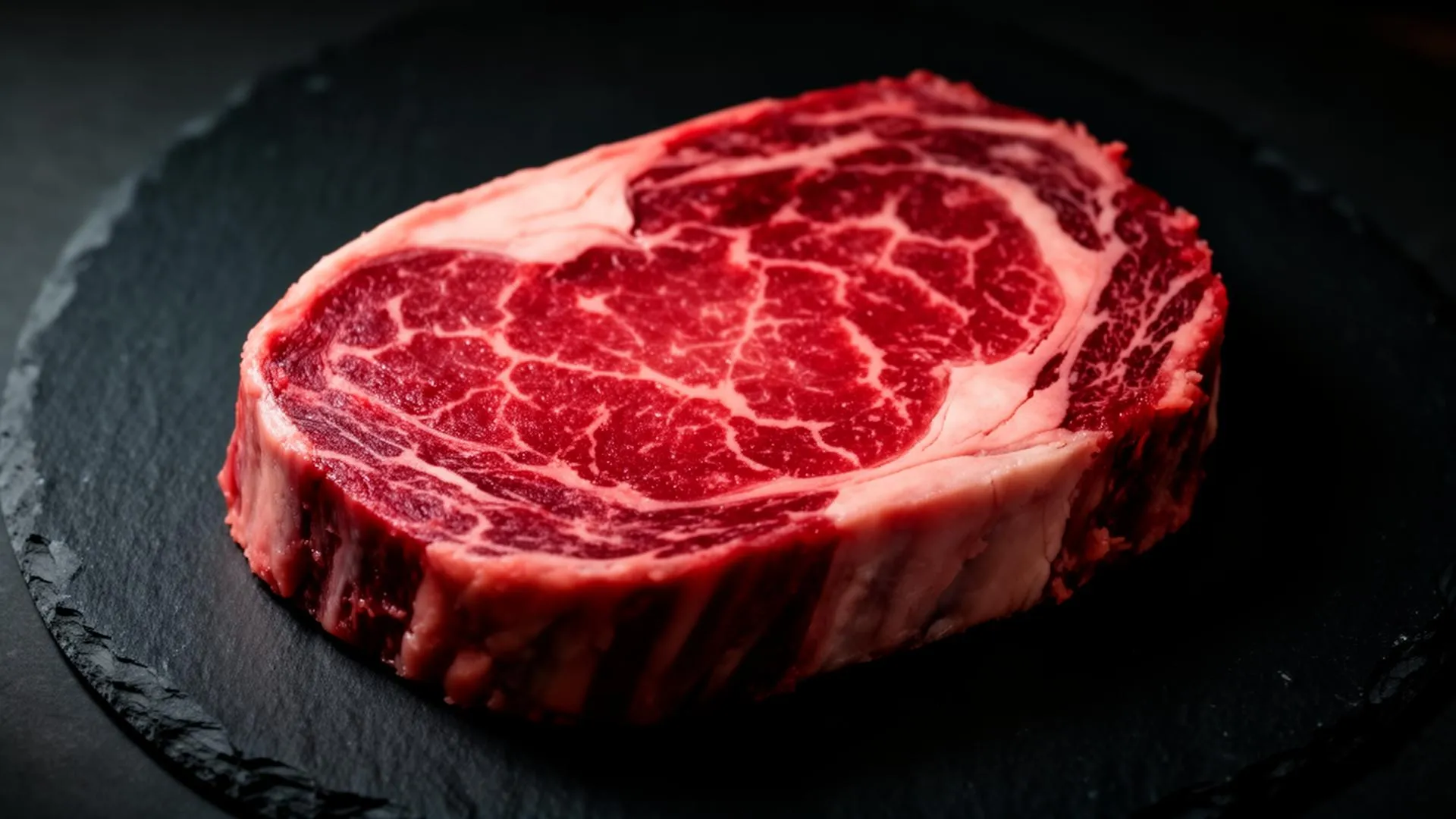
Score any strip steak from a photo
Photograph your strip steak and see how it grades against the regional system you select.