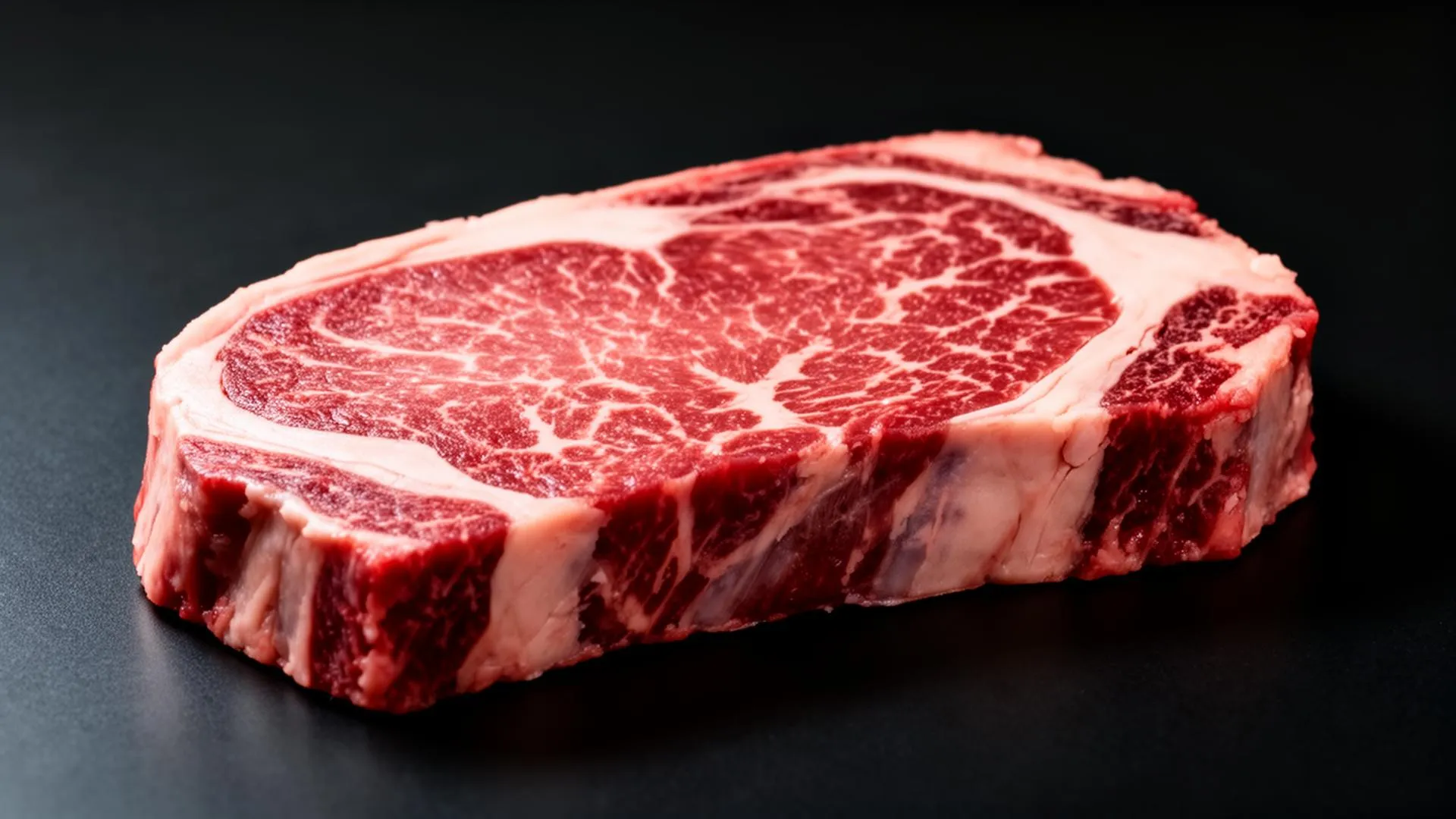
Rib primal · Beef cut guide
Ribeye
Ribeye is a premium beef steak cut from the rib primal between the 6th and 12th ribs of the carcass. It is the most heavily marbled common cut and serves as the quality-grading reference muscle in every major regional system: USDA Prime/Choice/Select grades, Japanese A5 BMS scoring, AUS-MEAT marbling, and Korean KAPE 1++/1+ classification are all assessed at the ribeye between the 12th and 13th ribs.


Anatomy and naming
The ribeye comes from the longissimus dorsi muscle, which sits along the back of the steer and does relatively little load-bearing work. Less work means more intramuscular fat and a finer grain, the two factors that drive eating quality. That is why every major beef-grading body in the world uses the ribeye as the visual reference cross-section for assessing the entire carcass.
On a steak case, ribeye sells under several names. American butchers call the bone-in version a "rib steak" and reserve "ribeye" for the boneless version, but the names are used interchangeably day-to-day. In Australia and New Zealand the boneless cut is "scotch fillet"; export trade calls it "cube roll". In France it is "entrecôte". In Latin America "ojo de bife" is the same muscle. Same anatomy, different label, same grading reference.
Also known as
Rib steak · Scotch fillet (Australia/NZ) · Cube roll · Entrecôte (France) · Costilla / ojo de bife (LatAm)
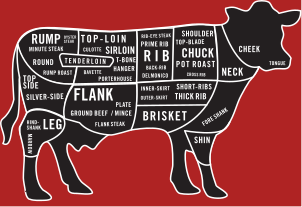
USDA beef carcass diagram - Ribeye sits in the Rib primal
How to spot a good one
Visual markers
Dense, web-like marbling, fine intramuscular fat distributed evenly through the lean rather than clumped in chunks
A bright cherry-red lean color (or pink-white at very high BMS scores)
A thick fat cap on the outer rim, white and firm, not yellow or oily
A noticeable "spinalis dorsi" cap on the upper edge of the cut, a separate small muscle widely considered the best-eating part of the ribeye
Fine-grained lean texture; coarse, loose texture indicates older or lower-grade beef
Cooking, on Pro
Cook ribeye like its grade
MeatGrader Pro gives you a cooking guide tailored to the exact cut and quality grade in front of you. Temperature, time, primary and alternative methods, resting, pairings.
A USDA Prime ribeye gets a different guide than a Choice ribeye, and an A5 BMS 9 wagyu cut gets something else again. Generic recipes do not know which one you have. Pro does.
Free with 3 analyses on signup. Pro is $1.99/month for unlimited analyses + the cooking guide.
How it grades
Grading ribeye
Ribeye is the primary grading-reference cut under USDA, CBGA, JMGA, MSA/AUS-MEAT, and KAPE. The grade you see on a ribeye is the grade applied to the whole carcass it came from, and the visual factors at the ribeye cross-section are what graders evaluate. MeatGrader applies the same factors to a ribeye photograph and returns the inferred grade plus a per-factor breakdown.
FAQ
Common questions about ribeye
What people ask most about picking, cooking, and grading this cut.
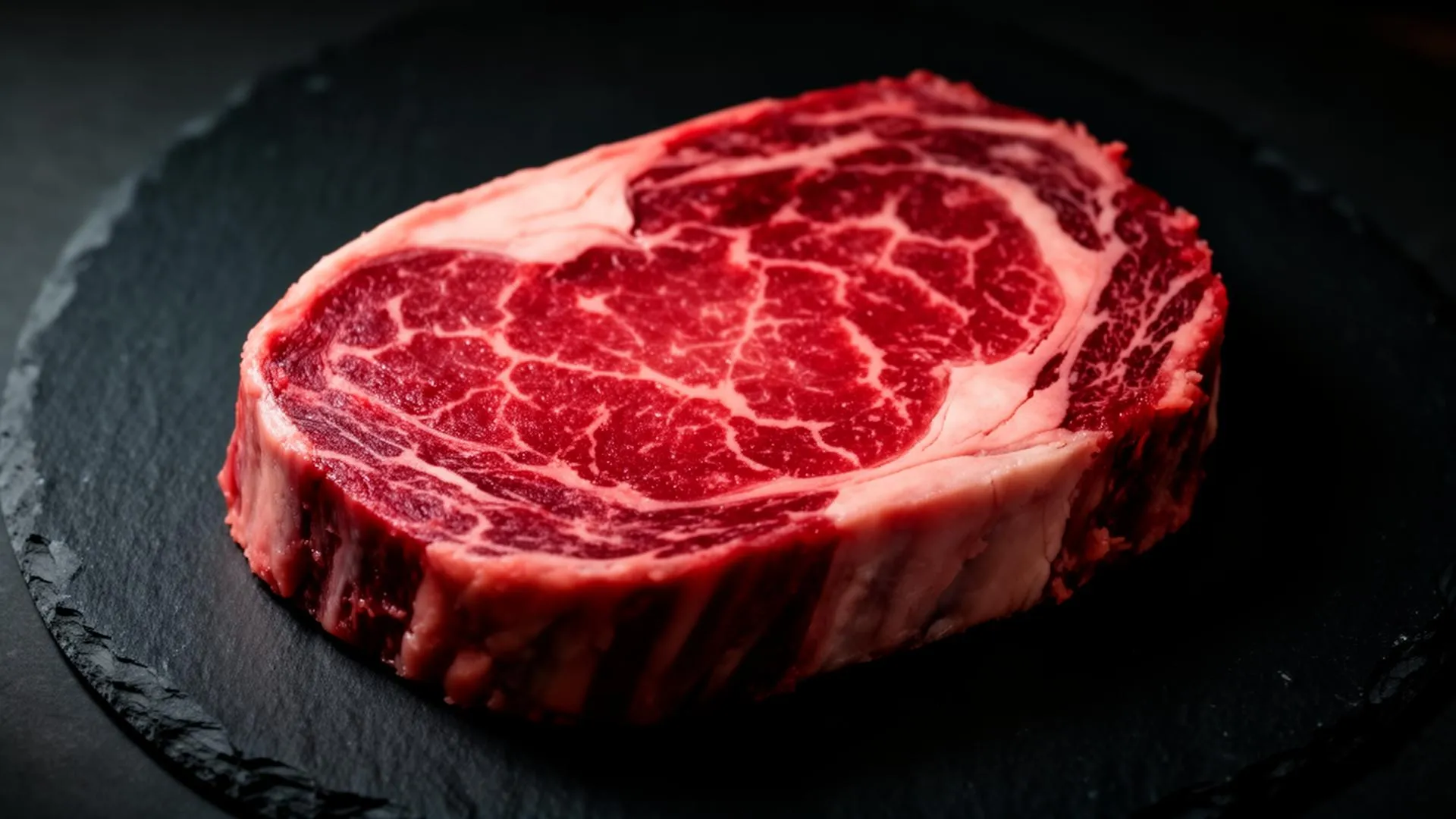
Score any ribeye from a photo
Photograph your ribeye and see how it grades against the regional system you select.